
Playing to Win: Our Day 2 Takeaways from AFLA
The “Strategy over chance” theme carried through the day, and here’s what stood out to us.
Be the Bettor, Not the Caller
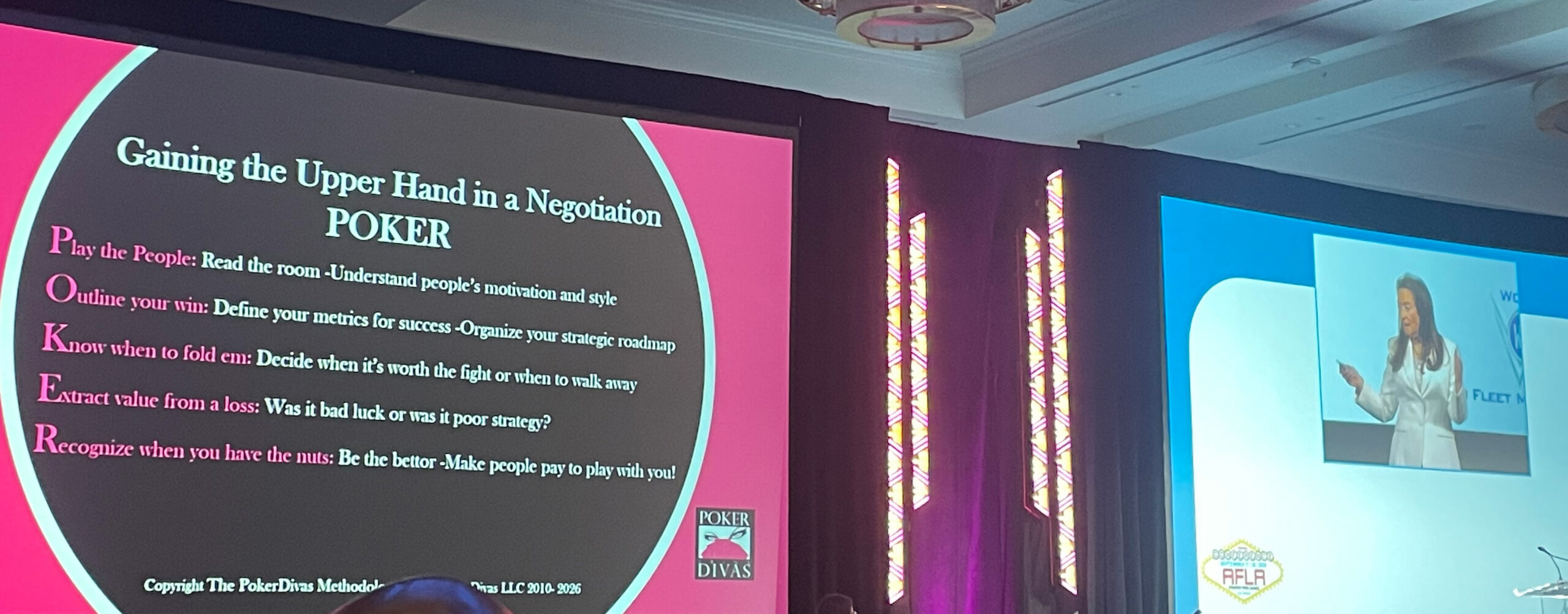
The Women in Fleet Management keynote came from Ellen Leikind, a former Fortune 500 marketing executive, author, and founder of PokerDivas. Her message was simple and memorable. It was that poker isn’t really a card game. It’s a people game you happen to play with cards, and the mindset it teaches is to play to win.
Ellen’s “light bulb moment” came during a business negotiation. She realized she was holding the equivalent of pocket aces, so she held firm on her price. That moment led her to start PokerDivas 20 years ago and to spend two decades teaching professionals how the poker table and the conference table mirror each other.
She mapped negotiation behavior along two lines. The first is aggressive versus passive: do you invest time, money, and energy to drive the outcome, or do you wait and hope? The second is tight versus loose: are you selective about where you engage, or do you jump into everything? Those combinations create four personality types. The “Firecracker” is loose and aggressive, and the best way to handle them is a calm “I hear you” followed by facts. The tight, aggressive player is decisive, plans ahead, and responds to data. The loose, passive “calling station” values harmony, so frame your ask as a win for the team. The tight, passive player avoids risk, and moving them forward may require escalation.
Her central idea was be the bettor, not the caller. Callers react. Bettors take initiative, ask for what they want, and make others respond on their terms. Ellen shared several more lessons that translate directly to fleet:
- Know exactly what you want. Vague goals lead to vague results. Walk in with specific, measurable targets.
- Know when to fold. Walking away from a bad partnership isn’t failure. It’s a strategic move that protects your resources.
- Separate bad luck from bad strategy. A loss doesn’t always mean you made the wrong call. Review the decision, not just the outcome.
- Act fast when you have leverage. When you hold an unbeatable position, such as a unique capability or a key relationship, press it quickly, because that advantage rarely lasts.
- Manage your image. People remember tone, eye contact, and presence more than words. Don’t let yourself be underestimated.
Her closing checklist included:
- Read the room
- Define your win
- Plan your roadmap
- Know when to fold
- Learn from losses
- and bet boldly from a position of strength.
The keynote connected naturally to the Day 1 message. April Lewis asked us to decide who we want to be. Ellen showed us how to go ask for it.
Stronger Together: The Power of Fleet Community
The Stronger Together panel reinforced why our fleet industry feels different. One panelist, a 30-year fleet veteran, described “collaborative competitiveness,” the idea that knowing when to compete and when to collaborate keeps the whole industry healthy. As the moderator pointed out, the competitor you meet today may be your colleague tomorrow.
Another panelist shared how the fleet community rallied behind Women in Fleet during a difficult time. Her advice was to step outside your comfort zone and connect in the hallways, not just the sessions. A third panelist spoke about the “champions” who advocated for her career, and she challenged leaders to give their teams credit and visibility. Her point that people often get involved for business reasons and stay because they want to give back rang true for many of us.
As AI changes how work gets done, the panel agreed that human connection only becomes more valuable.
AI You Can Use on Monday Morning
 The AI Workshop put that technology into attendees’ hands. Phones and laptops were out, and participants practiced prompting with sample fleet data tables, photos, and voice input.
The presenter shared that daily AI use is now an expectation at their company. They also shared real fleet results. After rolling out AI dash cams and telematics with AI-driven driver coaching in February 2026, the company saw zero percent turnover and a long streak without an avoidable rear-end accident. The presenter was careful to note this was correlation, not proven causation. Their system now produces monthly coaching decks for safety managers automatically. AI also helped them communicate with drivers in their own languages, with a person always reviewing the translation.
The most practical takeaway was a crawl, walk, run framework. Crawl by using AI to summarize long reports. Walk by giving it raw data and asking focused questions. Run by automating recurring decisions, with the right governance in place. Other useful tips included starting a new chat for each new task, using projects to keep context separate, and following your company’s AI policies.
Day 2 Closing Thoughts
 One thing was clear, the strongest fleet professionals combine confidence, community, and curiosity. They ask boldly for what they need, they invest in the people around them, and they learn new tools instead of waiting for them.
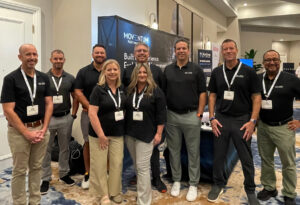
Thank you again to everyone who stopped by our table. If we haven’t met yet, and would like to speak, please contact us at moventumfleet.com.